

Programmable HVDC Power Supply Manufacturers & Exporters
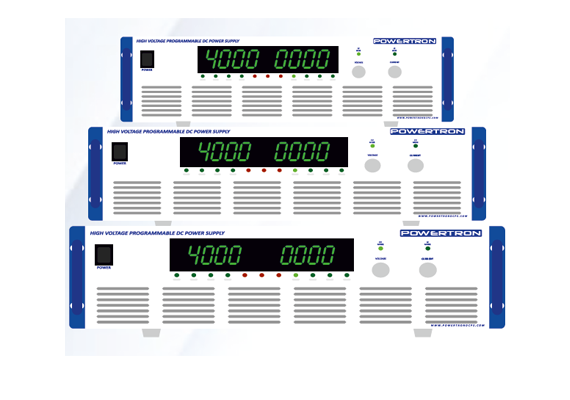






Technical Specifications — Programmable High Voltage DC Power Supply
| Parameter | Specification | What It Means For You |
|---|---|---|
| Rated Output Power | 500 W to 8 kW standard; customised to 50 kW | One design family covers bench, rack and plant-level duty. |
| Output Voltage | +1000V to +50kV; optional −1000V to −50kV | Positive or negative polarity without changing vendor or platform. |
| Output Current | 0.01 mA to 5000 mA depending on model | Low-current precision work and high-current process loads both served. |
| Voltage Ripple | ≤0.05% FS (low-voltage models) to ≤0.1% FS | Clean DC for detectors, imaging and precision metrology. |
| Programming Resolution | 1 V and 0.01 mA to 1 mA by model | Fine set-point control for pass/fail testing at tight thresholds. |
| Display Resolution | 1 V and 0.01 mA to 1 mA by model | Readback matches the set-point granularity for traceable records. |
| OVP Trip Point | Typically 5% above rated output, programmable | Protects the load without nuisance tripping at working voltage. |
| Startup Behaviour | Hardware soft-start, no overshoot at power-on | Fragile DUTs and capacitor banks are never transient-stressed. |
| Voltage Rise Time | Adjustable by software | Ramp matched to the withstand standard being applied. |
| Protection Set | OVP, OTP, ACF (AC fail), current limit / arc protection | Equipment and operator safety in high-energy environments. |
| Standard Interfaces | RS232 and RS485, Modbus-RTU command set | Direct integration with PLC, SCADA and existing test software. |
| Optional Interfaces | 0–5V, 0–10V, 4–20mA control and feedback; LAN | Retrofits into legacy analog loops or Ethernet-based ATE. |
| Operating Modes | List Mode, Auto Run, Preset with output open-circuit | Unattended sequencing and safe pre-setting before HV is applied. |
| Cooling | Forced air; conduction or oil-insulated on custom HV builds | Continuous-duty operation without derating in Indian ambients. |
| Enclosure | Bench, 19-inch rack or floor-standing | Fits the existing test cell without mechanical rework. |
AVAILABLE VARIANTS
| Model (600W) |
Rated Output Voltage |
Voltage Ripple |
Programming Resolution |
Display Resolution |
|||||
| V | A | OVP | V | A | OVP | V | A | ||
| PIPL-1KP600-HPDP | 0~1000V | 0~600mA | 0~1050V | ≤0.05%FS | 1V | 0.1mA | 1V | 1V | 0.1mA |
| PIPL-1KN600-HPDP | 200~1000V | 0~600mA | 200~1050V | ≤0.05%FS | 1V | 0.1mA | 1V | 1V | 0.1mA |
| PIPL-1.2KP500-HPDP | 0~1200V | 0~500mA | 0~1260V | ≤0.05%FS | 1V | 0.1mA | 1V | 1V | 0.1mA |
| PIPL-1.2KN500-HPDP | 240~1200V | 0~500mA | -240~1260V | ≤0.05%FS | 1V | 0.1mA | 1V | 1V | 0.1mA |
| PIPL-1.5KP400-HPDP | 0~1500V | 0~400mA | 0~1575V | ≤0.05%FS | 1V | 0.1mA | 1V | 1V | 0.1mA |
| PIPL-1.5KN400-HPDP | 300~1500V | 0~400mA | 300~1575V | ≤0.05%FS | 1V | 0.1mA | 1V | 1V | 0.1mA |
| PIPL-2KP300-HPDP | 0~2000V | 0~300mA | 0~2100V | ≤0.1%FS | 1V | 0.1mA | 1V | 1V | 0.1mA |
| PIPL-2KN300-HPDP | 400~2000V | 0~300mA | 400~2100V | ≤0.1%FS | 1V | 0.1mA | 1V | 1V | 0.1mA |
| PIPL-3KP200-HPDP | 200~3000V | 0~200mA | 200~3150V | ≤0.1%FS | 1V | 0.1mA | 1V | 1V | 0.1mA |
| PIPL-3KN200-HPDP | 600~3000V | 0~200mA | 600~3150V | ≤0.1%FS | 1V | 0.1mA | 1V | 1V | 0.1mA |
| PIPL-4KP150-HPDP | 200~40 00V | 0~150mA | 200~4200V | ≤0.1%FS | 1V | 0.1mA | 1V | 1V | 0.1mA |
| PIPL-4KN150-HPDP | 800~4000V | 0~150mA | 800~4200V | ≤0.1%FS | 1V | 0.1mA | 1V | 1V | 0.1mA |
| PIPL-5KP120-HPDP | 300~5000V | 0~120mA | 300~5250V | ≤0.1% FS | 1V | 0.1mA | 1V | 1V | 0.1mA |
| PIPL-5KN120-HPDP | 1000~5000V | 0~120mA | 1000~5250V | ≤0.1%FS | 1V | 0.1mA | 1V | 1V | 0.1mA |
| PIPL-6KP100-HPDP | 400~60 00V | 0~100mA | 400~6120V | ≤0.1%FS | 1V | 0.1mA | 1V | 1V | 0.1mA |
| PIPL-6KN100-HPDP | 1200~6000V | 0~100mA | -1200~ 6120V | ≤0.1%FS | 1V | 0.1mA | 1V | 1V | 0.1mA |
| PIPL-8KP75-HPDP | 500~80 00V | 0~75mA | 500~8400V | ≤0.1%FS | 1V | 0.01mA | 1V | 1V | 0.01mA |
| PIPL-8KN75-HPDP | 1600~8000V | 0~75mA | 1600~8400V | ≤0.1%FS | 1V | 0.01mA | 1V | 1V | 0.01mA |
| PIPL-10KP60-HPDP | 800~10000V | 0~60mA | 800~1050 0V | ≤0.1%FS | 1V | 0.01mA | 1V | 1V | 0.01mA |
| PIPL-10KN60-HPDP | 2000~10000V | 0~60mA | 2000~10500V | ≤0.1%FS | 1V | 0.01mA | 1V | 1V | 0.01mA |
| PIPL-12KP50-HPDP | 1000~12000V | 0~50mA | 1000~12600V | ≤0.1%FS | 1V | 0.01mA | 1V | 1V | 0.01mA |
| PIPL-12KN50-HPDP | 2400~12000V | 0~50mA | 2400~12600V | ≤0.1%FS | 1V | 0.01mA | 1V | 1V | 0.01mA |
| Model (1200W) |
Rated Output Voltage |
Voltage Ripple |
Programming Resolution |
Display Resolution |
|||||
| V | A | OVP | V | A | OVP | V | A | ||
| PIPL-1KP1200-HPDP | 0 ~ 1000V | 0 ~ 1200mA | 0 ~ 1050V | 0 ~ 1200mA | ≤0.1% FS | 1V | 1mA | 1V | 1mA |
| PIPL-1KN1200-HPDP | -200 ~ -1000V | 0 ~ 1200mA | -200 ~ -1050V | 0 ~ 1200mA | ≤0.1% FS | 1V | 1mA | 1V | 1mA |
| PIPL-1.2KP1000-HPDP | 0 ~ 1200V | 0 ~ 1000mA | 0 ~ 1260V | 0 ~ 1000mA | ≤0.1% FS | 1V | 1mA | 1V | 1mA |
| PIPL-1.2KN1000-HPDP | -240 ~ -1200V | 0 ~ 1200mA | -240 ~ -1260V | 0 ~ 1200mA | ≤0.1% FS | 1V | 1mA | 1V | 1mA |
| PIPL-1.4KP800-HPDP | 0 ~ 1500V | 0 ~ 800mA | 0 ~ 1575V | 0 ~ 800mA | ≤0.1% FS | 1V | 0.1mA | 1V | 0.1mA |
| PIPL-1.5KN800-HPDP | -300 ~ -1500V | 0 ~ 800mA | -300 ~ -1575V | 0 ~ 800mA | ≤0.1% FS | 1V | 0.1mA | 1V | 0.1mA |
| PIPL-2KP600-HPDP | 0 ~ 2000V | 0 ~ 600mA | 0 ~ 2100V | 0 ~ 600mA | ≤0.1% FS | 1V | 0.1mA | 1V | 0.1mA |
| PIPL-2KN600-HPDP | -400 ~ -2000V | 0 ~ 600mA | -400 ~ -2100V | 0 ~ 600mA | ≤0.1% FS | 1V | 0.1mA | 1V | 0.1mA |
| PIPL-3KP400-HPDP | 200 ~ 3000V | 0 ~ 400mA | 200 ~ 3150V | 0 ~ 400mA | ≤0.1% FS | 1V | 0.1mA | 1V | 0.1mA |
| PIPL-3KN400-HPDP | -600 ~ -3000V | 0 ~ 400mA | -600 ~ -3150V | 0 ~ 400mA | ≤0.1% FS | 1V | 0.1mA | 1V | 0.1mA |
| PIPL-4KP300-HPDP | 200 ~ 4000V | 0 ~ 300mA | 200 ~ 4200V | 0 ~ 300mA | ≤0.1% FS | 1V | 0.1mA | 1V | 0.1mA |
| PIPL-4KN300-HPDP | -800 ~ -4000V | 0 ~ 300mA | -800 ~ -4200V | 0 ~ 300mA | ≤0.1% FS | 1V | 0.1mA | 1V | 0.1mA |
| PIPL-5KP240-HPDP | 300 ~ 5000V | 0 ~ 240mA | 300 ~ 5250V | 0 ~ 240mA | ≤0.1% FS | 1V | 0.1mA | 1V | 0.1mA |
| PIPL-5KN240-HPDP | -1000 ~ -5000V | 0 ~ 240mA | -1000 ~ -5250V | 0 ~ 240mA | ≤0.1% FS | 1V | 0.1mA | 1V | 0.1mA |
| PIPL-6KP200-HPDP | 400 ~ 6000V | 0 ~ 200mA | 400 ~ 6120V | 0 ~ 200mA | ≤0.1% FS | 1V | 0.1mA | 1V | 0.1mA |
| PIPL-6KN200-HPDP | -1200 ~ -6000V | 0 ~ 200mA | -1200 ~ -6120V | 0 ~ 200mA | ≤0.1% FS | 1V | 0.1mA | 1V | 0.1mA |
| PIPL-8KP150-HPDP | 500 ~ 8000V | 0 ~ 150mA | 500 ~ 8400V | 0 ~ 150mA | ≤0.1% FS | 1V | 0.1mA | 1V | 0.1mA |
| PIPL-8KN150-HPDP | -1600 ~ -8000V | 0 ~ 150mA | -1600 ~ -8400V | 0 ~ 150mA | ≤0.1% FS | 1V | 0.1mA | 1V | 0.1mA |
| PIPL-10KP120-HPDP | 800 ~ 10000V | 0 ~ 120mA | 800 ~ 10500V | 0 ~ 120mA | ≤0.1% FS | 1V | 0.1mA | 1V | 0.1mA |
| PIPL-10KN120-HPDP | -2000 ~ -10000V | 0 ~ 120mA | -2000 ~ -10500V | 0 ~ 120mA | ≤0.1% FS | 1V | 0.1mA | 1V | 0.1mA |
| PIPL-12KP100-HPDP | 1000 ~ 12000V | 0 ~ 100mA | 1000 ~ 12500V | 0 ~ 100mA | ≤0.1% FS | 1V | 0.01mA | 1V | 0.01mA |
| PIPL-12KN100-HPDP | -2400 ~ -12000V | 0 ~ 100mA | -2400 ~ -12500V | 0 ~ 100mA | ≤0.1% FS | 1V | 0.01mA | 1V | 0.01mA |
| Model (2400W) |
Rated Output Voltage |
Voltage Ripple |
Programming Resolution |
Display Resolution |
|||||
| V | A | OVP | V | A | OVP | V | A | ||
| PIPL-1KP2400-HPDP | 0~1000V | 0~2400mA | 0~1050V | 0~2400mA | ≤0.1% FS | 1V | 1mA | 1V | 1mA |
| PIPL-1KN2400-HPDP | -200~-1000V | 0~2400mA | -200~-1050V | 0~2400mA | ≤0.1% FS | 1V | 1mA | 1V | 1mA |
| PIPL-2KP2000-HPDP | 0~2000V | 0~2000mA | 0~2100V | 0~2000mA | ≤0.1% FS | 1V | 1mA | 1V | 1mA |
| PIPL-2KN2000-HPDP | -240~-1200V | 0~2000mA | -240~-1260V | 0~2000mA | ≤0.1% FS | 1V | 1mA | 1V | 1mA |
| PIPL-1.5KP1600-HPDP | 0~1500V | 0~1600mA | 0~1575V | 0~1600mA | ≤0.1% FS | 1V | 1mA | 1V | 1mA |
| PIPL-1.5KN1600-HPDP | -300~-1500V | 0~1600mA | -300~-1575V | 0~1600mA | ≤0.1% FS | 1V | 1mA | 1V | 1mA |
| PIPL-2.8KP1200-HPDP | 0~2800V | 0~1200mA | 0~2100V | 0~1200mA | ≤0.1% FS | 1V | 1mA | 1V | 1mA |
| PIPL-2.8KN1200-HPDP | -400~-2000V | 0~1200mA | -400~-2100V | 0~1200mA | ≤0.1% FS | 1V | 1mA | 1V | 1mA |
| PIPL-3KP800-HPDP | 200~3000V | 0~800mA | 200~3150V | 0~800mA | ≤0.1% FS | 1V | 0.1mA | 1V | 0.1mA |
| PIPL-3KN800-HPDP | -600~-3000V | 0~800mA | -600~-3150V | 0~800mA | ≤0.1% FS | 1V | 0.1mA | 1V | 0.1mA |
| PIPL-4KP600-HPDP | 200~4000V | 0~600mA | 200~4200V | 0~600mA | ≤0.1% FS | 1V | 0.1mA | 1V | 0.1mA |
| PIPL-4KN600-HPDP | -800~-4000V | 0~600mA | -800~-4200V | 0~600mA | ≤0.1% FS | 1V | 0.1mA | 1V | 0.1mA |
| PIPL-5KP480-HPDP | 300~5000V | 0~480mA | 300~5250V | 0~480mA | ≤0.1% FS | 1V | 0.1mA | 1V | 0.1mA |
| PIPL-5KN480-HPDP | -1000~-5000V | 0~480mA | -1000~-5250V | 0~480mA | ≤0.1% FS | 1V | 0.1mA | 1V | 0.1mA |
| PIPL-6KP400-HPDP | 400~6000V | 0~400mA | 400~6120V | 0~400mA | ≤0.1% FS | 1V | 0.1mA | 1V | 0.1mA |
| PIPL-6KN400-HPDP | -1200~-6000V | 0~400mA | -1200~-6120V | 0~400mA | ≤0.1% FS | 1V | 0.1mA | 1V | 0.1mA |
| PIPL-8KP300-HPDP | 500~8000V | 0~300mA | 500~8400V | 0~300mA | ≤0.1% FS | 1V | 0.1mA | 1V | 0.1mA |
| PIPL-8KN300-HPDP | -1600~-8000V | 0~300mA | -1600~-8400V | 0~300mA | ≤0.1% FS | 1V | 0.1mA | 1V | 0.1mA |
| PIPL-10KP240-HPDP | 800~10000V | 0~240mA | 800~10500V | 0~240mA | ≤0.1% FS | 1V | 0.1mA | 1V | 0.1mA |
| PIPL-10KN240-HPDP | -2000~-10000V | 0~240mA | -2000~-10500V | 0~240mA | ≤0.1% FS | 1V | 0.1mA | 1V | 0.1mA |
| Model (4000W) |
Rated Output Voltage |
Voltage Ripple |
Programming Resolution |
Display Resolution |
|||||
| V | A | OVP | V | A | OVP | V | A | ||
| PIPL-8005000-HPDP | 0~800V | 0~5000mA | 0~840V | ≤0.1% FS | 0.1V | 1mA | 0.1V | 0.1V | 1mA |
| PIPL-1KP4000-HPDP | 0~1000V | 0~4000mA | 0~1050V | ≤0.1% FS | 1V | 1mA | 1V | 1V | 1mA |
| PIPL-1.2KP4000-HPDP | ~200~1000V | 0~4000mA | ~200~1050V | ≤0.1% FS | 1V | 1mA | 1V | 1V | 1mA |
| PIPL-1.2KP3300-HPDP | 0~1200V | 0~3300mA | 0~1260V | ≤0.1% FS | 1V | 1mA | 1V | 1V | 1mA |
| PIPL-1.2KN3300-HPDP | ~240~1200V | 0~3300mA | ~240~1260V | ≤0.1% FS | 1V | 1mA | 1V | 1V | 1mA |
| PIPL-1.5KP2600-HPDP | 0~1500V | 0~2600mA | 0~1575V | ≤0.1% FS | 1V | 1mA | 1V | 1V | 1mA |
| PIPL-1.5KN2600-HPDP | ~300~1500V | 0~2600mA | ~300~1575V | ≤0.1% FS | 1V | 1mA | 1V | 1V | 1mA |
| PIPL-2KP2000-HPDP | 0~2000V | 0~2000mA | 0~2100V | ≤0.1% FS | 1V | 1mA | 1V | 1V | 1mA |
| PIPL-2KN2000-HPDP | ~400~2000V | 0~2000mA | ~400~2100V | ≤0.1% FS | 1V | 1mA | 1V | 1V | 1mA |
| PIPL-3KP1300-HPDP | 400~3000V | 0~1300mA | 400~3150V | ≤0.1% FS | 1V | 1mA | 1V | 1V | 1mA |
| PIPL-3KN1300-HPDP | 600~3000V | 0~1300mA | 600~3150V | ≤0.1% FS | 1V | 1mA | 1V | 1V | 1mA |
| PIPL-4KP1000-HPDP | 550~4000V | 0~1000mA | 550~4200V | ≤0.1% FS | 1V | 1mA | 1V | 1V | 1mA |
| PIPL-4KN1000-HPDP | 800~4000V | 0~800mA | 800~4200V | ≤0.1% FS | 1V | 1mA | 1V | 1V | 1mA |
| PIPL-5KP800-HPDP | 1000~5000V | 0~800mA | 1000~5250V | ≤0.1% FS | 1V | 0.1mA | 1V | 1V | 0.1mA |
| PIPL-6KP660-HPDP | 800~6000V | 0~660mA | 800~6120V | ≤0.1% FS | 1V | 0.1mA | 1V | 1V | 0.1mA |
| PIPL-6KN660-HPDP | ~1200~6000V | 0~660mA | ~1200~6120V | ≤0.1% FS | 1V | 0.1mA | 1V | 1V | 0.1mA |
| Model (5000W) |
Rated Output Voltage |
Voltage Ripple |
Programming Resolution |
Display Resolution |
|||||
| V | A | OVP | V | A | OVP | V | A | ||
| PIPL-1KP5000-HPDP | 0~1000V | 0~5000mA | 0~1050V | ≤0.1% FS | 1V | 1mA | 1V | 1V | 1mA |
| PIPL-1KN5000-HPDP | ~200~1000V | 0~5000mA | ~200~1050V | ≤0.1% FS | 1V | 1mA | 1V | 1V | 1mA |
| PIPL-1.2KP4160-HPDP | 0~1200V | 0~4160mA | 0~1260V | ≤0.1% FS | 1V | 1mA | 1V | 1V | 1mA |
| PIPL-1.2KN4160-HPDP | ~240~1200V | 0~4160mA | ~240~1260V | ≤0.1% FS | 1V | 1mA | 1V | 1V | 1mA |
| PIPL-1.5KP3300-HPDP | 0~1500V | 0~3300mA | 0~1575V | ≤0.1% FS | 1V | 1mA | 1V | 1V | 1mA |
| PIPL-1.5KN3300-HPDP | ~300~1500V | 0~3300mA | ~300~1575V | ≤0.1% FS | 1V | 1mA | 1V | 1V | 1mA |
| PIPL-2KP2500-HPDP | 0~2000V | 0~2500mA | 0~2100V | ≤0.1% FS | 1V | 1mA | 1V | 1V | 1mA |
| PIPL-2KN2500-HPDP | ~400~2000V | 0~2500mA | ~400~2100V | ≤0.1% FS | 1V | 1mA | 1V | 1V | 1mA |
| PIPL-3KP1600-HPDP | 400~3000V | 0~1600mA | 400~3150V | ≤0.1% FS | 1V | 1mA | 1V | 1V | 1mA |
| PIPL-3KN1600-HPDP | 600~3000V | 0~1600mA | 600~3150V | ≤0.1% FS | 1V | 1mA | 1V | 1V | 1mA |
| PIPL-4KP1250-HPDP | 550~4000V | 0~1250mA | 550~4200V | ≤0.1% FS | 1V | 1mA | 1V | 1V | 1mA |
| PIPL-4KN1250-HPDP | 800~4000V | 0~1250mA | 800~4200V | ≤0.1% FS | 1V | 1mA | 1V | 1V | 1mA |
| PIPL-5KP1000-HPDP | 700~5000V | 0~1000mA | 700~5250V | ≤0.1% FS | 1V | 1mA | 1V | 1V | 1mA |
| PIPL-5KN1000-HPDP | 1000~5000V | 0~1000mA | 1000~5250V | ≤0.1% FS | 1V | 1mA | 1V | 1V | 1mA |
| PIPL-6KP830-HPDP | 800~6000V | 0~830mA | 800~6120V | ≤0.1% FS | 1V | 0.1mA | 1V | 1V | 0.1mA |
| PIPL-6KN830-HPDP | ~1200~6000V | 0~830mA | ~1200~6120V | ≤0.1% FS | 1V | 0.1mA | 1V | 1V | 0.1mA |
| Model (3000W) |
Rated Output Voltage |
Voltage Ripple |
Programming Resolution |
Display Resolution |
|||||
| V | A | OVP | V | A | OVP | V | A | ||
| PIPL-1KP3000-HPDP | 0~1000V | 0~3000mA | 0~1050V | ≤0.1% FS | 1V | 1mA | 1V | 1V | 1mA |
| PIPL-1KN3000-HPDP | ~200~1000V | 0~3000mA | ~200~1050V | ≤0.1% FS | 1V | 1mA | 1V | 1V | 1mA |
| PIPL-1.2KP2500-HPDP | 0~1200V | 0~2500mA | 0~1260V | ≤0.1% FS | 1V | 1mA | 1V | 1V | 1mA |
| PIPL-1.2KN2500-HPDP | ~240~1200V | 0~2500mA | ~240~1260V | ≤0.1% FS | 1V | 1mA | 1V | 1V | 1mA |
| PIPL-1.5KP2000-HPDP | 0~1500V | 0~2000mA | 0~1575V | ≤0.1% FS | 1V | 1mA | 1V | 1V | 1mA |
| PIPL-1.5KN2000-HPDP | ~300~1500V | 0~2000mA | ~300~1575V | ≤0.1% FS | 1V | 1mA | 1V | 1V | 1mA |
| PIPL-2KP1500-HPDP | 0~2000V | 0~1500mA | 0~2100V | ≤0.1% FS | 1V | 1mA | 1V | 1V | 1mA |
| PIPL-2KN1500-HPDP | ~400~2000V | 0~1500mA | ~400~2100V | ≤0.1% FS | 1V | 1mA | 1V | 1V | 1mA |
| PIPL-3KP1000-HPDP | 200~3000V | 0~1000mA | 200~3150V | ≤0.1% FS | 1V | 1mA | 1V | 1V | 1mA |
| PIPL-3KN1000-HPDP | 300~3000V | 0~1000mA | 300~3150V | ≤0.1% FS | 1V | 1mA | 1V | 1V | 1mA |
| PIPL-4KP750-HPDP | 200~4000V | 0~750mA | 200~4200V | ≤0.1% FS | 1V | 0.1mA | 1V | 1V | 0.1mA |
| PIPL-4KN750-HPDP | 800~4000V | 0~750mA | 800~4200V | ≤0.1% FS | 1V | 0.1mA | 1V | 1V | 0.1mA |
| PIPL-5KP600-HPDP | 300~5000V | 0~600mA | 300~5250V | ≤0.1% FS | 1V | 0.1mA | 1V | 1V | 0.1mA |
| PIPL-5KN600-HPDP | 1000~5000V | 0~600mA | 1000~5250V | ≤0.1% FS | 1V | 0.1mA | 1V | 1V | 0.1mA |
| PIPL-6KP500-HPDP | 400~6000V | 0~500mA | 400~6120V | ≤0.1% FS | 1V | 0.1mA | 1V | 1V | 0.1mA |
| PIPL-6KN500-HPDP | ~1200~6000V | 0~500mA | ~1200~6120V | ≤0.1% FS | 1V | 0.1mA | 1V | 1V | 0.1mA |
| PIPL-8KP375-HPDP | 500~8000V | 0~375mA | 500~8400V | ≤0.1% FS | 1V | 0.1mA | 1V | 1V | 0.1mA |
| PIPL-8KN375-HPDP | 1600~8000V | 0~375mA | 1600~8400V | ≤0.1% FS | 1V | 0.1mA | 1V | 1V | 0.1mA |
| PIPL-10KP300-HPDP | 800~10000V | 0~300mA | 800~10500V | ≤0.1% FS | 1V | 0.1mA | 1V | 1V | 0.1mA |
| PIPL-10KN300-HPDP | ~2000~10000V | 0~300mA | ~2000~10500V | ≤0.1% FS | 1V | 0.1mA | 1V | 1V | 0.1mA |
HVDC Power Supply Range — Quick Selection Guide
| Power Class | Voltage Span | Current Span | Typical Application Fit |
|---|---|---|---|
| 600 W | 1kV to 12kV | 50 mA to 600 mA | R&D benches, dielectric testing, PMT and detector biasing |
| 1200 W | 1kV to 12kV | 100 mA to 1200 mA | Insulation resistance testing, component burn-in, ATE racks |
| 2400 W | 1kV to 10kV | 240 mA to 2400 mA | Capacitor charging, electrostatic processes, plasma sources |
| 3000 W | 1kV to 10kV | 300 mA to 3000 mA | Production test lines, EV traction component validation |
| 4000 W | 800V to 6kV | 660 mA to 5000 mA | High-current HV process loads, coating and curing systems |
| 5000 W | 1kV to 6kV | 830 mA to 5000 mA | Industrial process power, pilot-scale electrostatic plant |
| Customised | Up to ±50 kV | Application specific | X-ray generators, accelerators, ESP, defence and aerospace test rigs |
How a Programmable HVDC Power Supply Works
A programmable HVDC power supply converts incoming AC mains into a precisely regulated high voltage DC output under closed-loop digital control. The incoming supply is first rectified and filtered to an intermediate DC bus. That bus feeds a high-frequency switching inverter, which drives a high voltage step-up transformer at tens of kilohertz rather than at mains frequency. Switching at high frequency is what allows a 50kV supply to occupy a fraction of the volume and weight a conventional mains-frequency transformer-rectifier set would need for the same rating.
The transformer secondary feeds a high voltage rectifier and multiplier stage, typically a Cockcroft–Walton or cascaded diode-capacitor arrangement for the higher kV classes, followed by an HV filter network that suppresses ripple. Output voltage and current are continuously sampled through a precision high voltage divider and a current-sense element, and both signals are returned to the digital controller.
The controller compares those readings against the programmed set point and adjusts the inverter duty cycle accordingly. Because regulation is closed-loop and digital, the supply automatically operates in constant-voltage mode until the load draws the programmed current limit, at which point it crosses over into constant-current mode and holds there — the behaviour that makes these units safe on capacitive and arc-prone loads.
Protection is layered on top of the same control loop. Over-voltage, over-temperature and AC-fail conditions are detected in firmware and acted on within the switching period, while soft-start is implemented in hardware so the output rises in a controlled ramp regardless of what the firmware is doing at power-on. High voltage insulation is achieved by air spacing below 20kV and by encapsulation or oil immersion above it.
Applications of High Voltage DC Power Supplies by Industry
Selecting an HVDC power supply starts with the load, not the label. Capacitive loads need controlled rise time and current limiting; resistive insulation loads need voltage stability held precisely at the withstand level; beam and emission loads need very low ripple above all else; arc-prone process loads need fast current limiting and clean recovery. The mapping below is a starting point — POWERTRON engineers size the final unit against the actual load curve.
| Industry | Application | Load Character | Recommended Configuration |
|---|---|---|---|
| Power Utilities & Cable | DC withstand and insulation resistance testing on cables, bushings, transformers | Resistive with leakage | 3kV–12kV, 600W–1200W, positive polarity, adjustable ramp |
| Aerospace & Defence Electronics | HV component qualification, radar and TWT sub-system testing | Mixed / pulsed | 5kV–50kV custom, ≤0.05% FS ripple, LAN or analog interface |
| Semiconductor Manufacturing | Wafer inspection, sputtering, ion implant support supplies | Plasma / arc-prone | 2kV–10kV, fast arc detection with current limit and re-strike |
| R&D and Test Laboratories | Dielectric breakdown, material research, detector and PMT biasing | Low current, precision | 600W class, 1kV–12kV, negative option, ≤0.05% FS ripple |
| Automotive & EV Industry | Traction inverter, busbar and battery-pack isolation testing | Capacitive | 1kV–5kV, 2400W–5000W, controlled rise time, List Mode |
| Industrial Automation | Electrostatic coating, precipitators, industrial air cleaning | Continuous, arc-prone | Negative polarity 10kV–50kV custom, robust arc handling |
| Renewable Energy | PV string, inverter and HV DC link component validation | Capacitive / resistive | 1kV–3kV, 3000W–5000W, Modbus data logging |
| Medical & Analytical | X-ray generators, XRD and XRF instrumentation, mass spectrometry | Beam / emission | Custom kV class, lowest ripple grade, stability-optimised build |
Programmable HVDC Power Supply vs Conventional High Voltage Sources
Many Indian plants still run legacy variac-and-rectifier HV sets or unregulated transformer stacks. The comparison below is the single highest snippet-value block on the page.
| Criteria | POWERTRON Programmable HVDC | Conventional / Analog HV Source |
|---|---|---|
| Set-point accuracy | Digital entry, repeatable to 1 V resolution | Manual dial, operator-dependent and unrepeatable |
| Ripple and stability | ≤0.05–0.1% FS, regulated continuously | High ripple, drifts with mains and load variation |
| Regulation mode | Automatic CV/CC crossover at the programmed limit | No true current limit; fuse acts as the only ceiling |
| Automation | RS232/RS485 Modbus-RTU, LAN, List Mode sequencing | Little or no remote control capability |
| Protection | OVP, OTP, ACF, programmable current limit | Fuse and MCB only |
| Test traceability | Digital readback of V and I for logging and reports | Manual meter reading, no digital record |
| Footprint and efficiency | Compact HF switch-mode topology, high efficiency | Bulky mains-frequency magnetics, higher losses and heat |
| Polarity change | Negative-output models available across the range | Usually requires a separate unit or rewiring |
| Startup behaviour | Hardware soft-start, zero overshoot | Uncontrolled inrush, overshoot risk to the load |
Manufacturing, Quality and Export Capability
POWERTRON INDIA PVT. LTD. designs and manufactures the entire HVDC range at Plot No. A-426/427, Road No. 28, Wagle Estate MIDC, Thane West 400604, Maharashtra. Design, high voltage magnetics, PCB assembly, enclosure fabrication and final testing are all in-house, which is what allows both short lead times and genuine engineering support after the sale rather than component-level replacement.
Every unit is tested on load through its full voltage and current envelope before dispatch, with the test record supplied against the serial number. The company holds ISO, CE and BIS certifications, is MSME registered and GeM listed, and manufactures under the Make in India framework — making POWERTRON a practical import substitute for organisations currently sourcing high voltage supplies from overseas vendors. Domestic sales and service offices operate in Delhi, Pune, Hyderabad, Bangalore and Tamil Nadu, with international offices in Dubai, Singapore and Malaysia supporting export customers across the Middle East, Southeast Asia, Africa and Europe.
Frequently Asked Questions — Programmable HVDC Power Supply
Standard catalogue models cover +1000V to +50kV, with negative-polarity variants from −1000V to −50kV. Rated output power runs from 500W to 8kW as standard and is customised up to 50kW for industrial and research installations. The full model matrices on this page list the exact voltage and current pairing available in each power class.
Standard models are supplied as either positive (P suffix) or negative (N suffix) polarity. Applications that genuinely require polarity reversal within a single chassis — certain electrostatic precipitator, MEMS and materials-test setups — are handled as a customised bipolar build. Flag the switching requirement at enquiry stage so the correct topology is quoted.
RS232 and RS485 with a Modbus-RTU command set are standard on every unit, so the supply integrates directly with PLCs, SCADA systems, LabVIEW and other test-automation software without a custom driver. Optional 0–5V, 0–10V and 4–20mA analog control and feedback, and a LAN interface, are available and are factory-configured when specified at order.
Voltage ripple is ≤0.05% FS on the lower-voltage models and ≤0.1% FS across the wider range, with regulation maintained through both mains and load variation. Applications involving imaging, radiation detection or precision metrology should specify the ≤0.05% FS class explicitly at enquiry rather than accepting the range default.
Yes — capacitor charging is one of the primary applications. Software-adjustable voltage rise time, hardware soft-start with no overshoot, and a programmable current limit together allow the charge profile to be shaped so that neither the capacitor bank nor the supply is stressed. Provide the bank capacitance and target charge time when enquiring.
Over-voltage protection with a programmable trip point, over-temperature protection on the power stage, AC-fail detection that brings the output down cleanly on mains loss, and a programmable current limit that acts as both a compliance setting and an arc-energy limiter. Interlock provision, HV-rated terminations and defined creepage and clearance support safe cabinet installation.
Yes. Custom HVDC power supplies are built to specification, including non-catalogue voltage and current combinations, extended power ratings to 50kW, encapsulated or oil-insulated HV assemblies, bipolar output and specific enclosure formats. Provide load type, duty cycle, ambient conditions and interface requirement for a firm proposal.
List Mode stores a multi-step sequence of voltage, current and dwell settings that executes from a single trigger — useful for standard withstand and conditioning routines. Auto Run executes that stored sequence automatically whenever the unit is powered on, which suits burn-in cells and unattended overnight soak testing.
Manufacturing is at Wagle Estate MIDC, Thane West 400604, Maharashtra, India. Domestic sales and service offices operate in Delhi, Pune, Hyderabad, Bangalore and Tamil Nadu, with international offices in Dubai, Singapore and Malaysia. Export enquiries are welcome and full documentation is supplied.
Maximum output voltage and current, polarity, load type, required ripple class, control interface, duty cycle, ambient temperature and mounting format. With those eight inputs the correct model can be identified from the tables on this page or quoted as a custom build.
Need a Programmable HVDC Power Supply?
Request a technical proposal for your programmable HVDC power supply. Send your maximum voltage and current, polarity, load type, ripple class, interface, duty cycle and mounting format to sales@powertrondcps.com, or call +91 8097707496 / +91 7208560460. The POWERTRON application engineering team will return a model recommendation and quotation, including custom builds up to 50kW and ±50kV.